


Well auditing: knowing the real condition before investing
Well auditing: knowing the real condition before investing
Deep wells are critical assets for many agricultural, industrial, and real estate operations. However, there is not always enough information to determine their condition, their production potential, or the investment required to keep them operational.
This becomes especially relevant when a company manages several wells, acquires a new property, plans to expand its production, or must decide between rehabilitating an existing well, enabling it again, or building a new well .
In these scenarios, making decisions solely based on historical precedents can mean taking significant risks.
For this reason, at Río Blanco Perforaciones we incorporated the Well Engineering and Auditing service , aimed at generating technical information that allows us to evaluate, compare and plan investments related to groundwater collection infrastructure.
An existing well is not necessarily an operational well.
When analyzing a property that has wells, the first question is usually:
How many wells are there?
But technically that information is insufficient.
We also need to know:
Where are they located?
What is its effective depth?
What diameter and piping system do they have?
What condition are the pipes and screens in?
Do they have sediment, encrustations, or obstructions?
What is your static level?
How do they behave during pumping?
What flow rate can they currently deliver?
What kind of pump do they have installed?
What condition is the electrical panel in?
Is it advisable to maintain, rehabilitate, or replace them?
What investment will be needed to put them into operation?
Answering these questions transforms a list of wells into useful information for decision-making .
Tilama case: first understand, then intervene
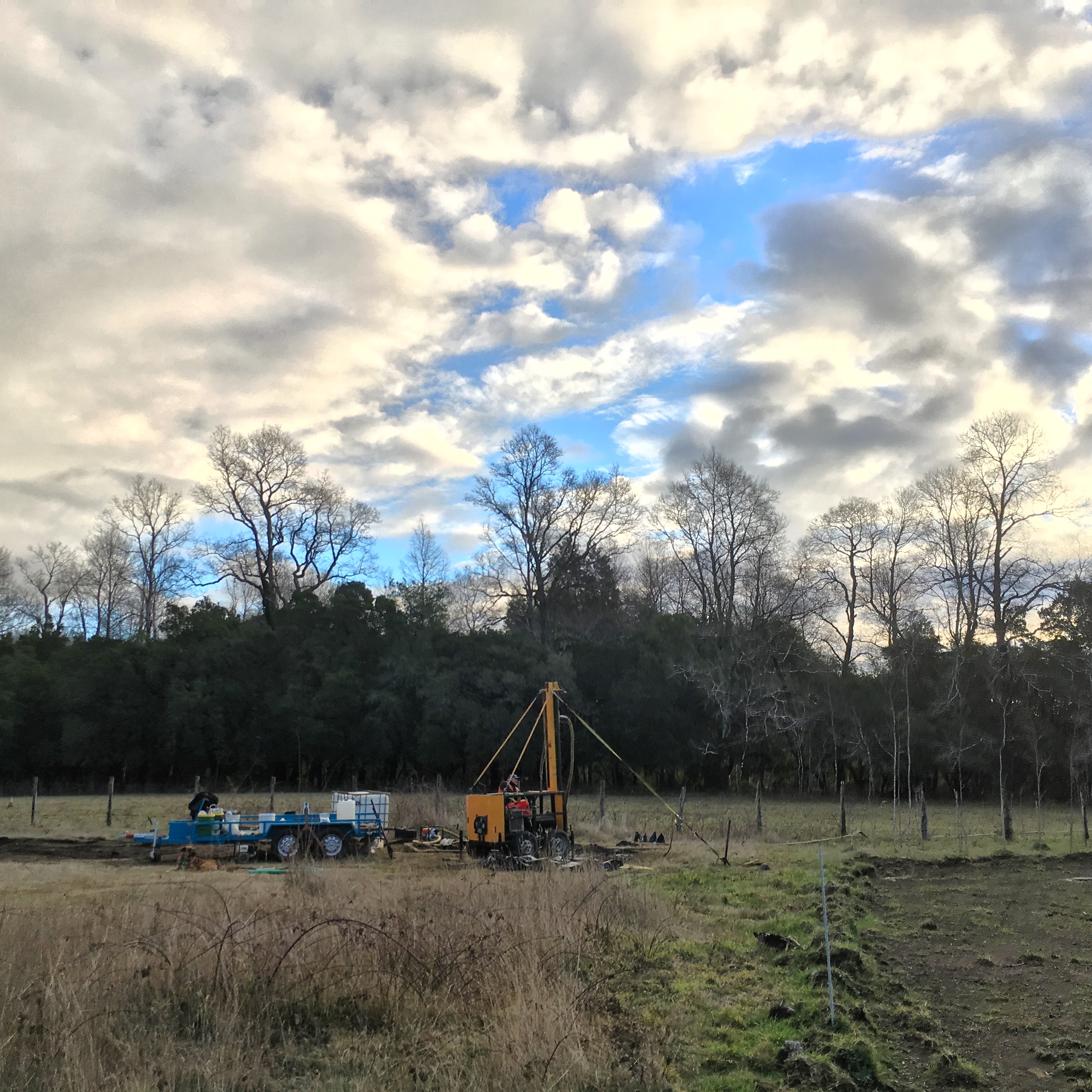
A good example of this approach was the work developed by Río Blanco on an agricultural estate located in Tilama, Coquimbo Region .
The project involved seven deep wells , on which identification, camera inspection, cleaning, pumping tests and subsequent commissioning were carried out.
The importance of the project lay precisely in addressing the wells as a set of assets that had to be evaluated individually , and not simply assuming that all existing intakes had the same conditions or required the same interventions.
Based on the information gathered, it was possible to progressively advance towards the technical solutions required for each intake.
The wells were subsequently equipped with submersible pumps ranging from 5.5 to 15 HP , power and control panels with frequency converters, and telemetry systems for remote monitoring and management of extractions.
This type of project demonstrates a principle that we consider fundamental:

Before investing in a well, you first need to know its actual condition.
What is a technical well audit?
A well audit consists of collecting, verifying, and analyzing technical information about one or more existing wells.
The scope is defined according to the characteristics of the project and can include anything from a preliminary review to a comprehensive on-site assessment.
1. Background Information Gathering
The first step is to review the available information:
construction background;
informed depths;
diameters;
previous pumping tests;
characteristics of installed pumps;
operational background;
location of the water intakes;
Technical documentation available.
In old wells, it is common to find incomplete information, so the background information must later be compared with the conditions observed on the ground.
2. Inspection and characterization
Depending on the project, the evaluation may consider:
georeferencing;
effective depth measurement;
static level measurement;
televised inspection;
inspection of pipes and screens;
identification of sediments and encrustations;
inspection of hydraulic installations;
pumping system inspection;
evaluation of power and control panels.
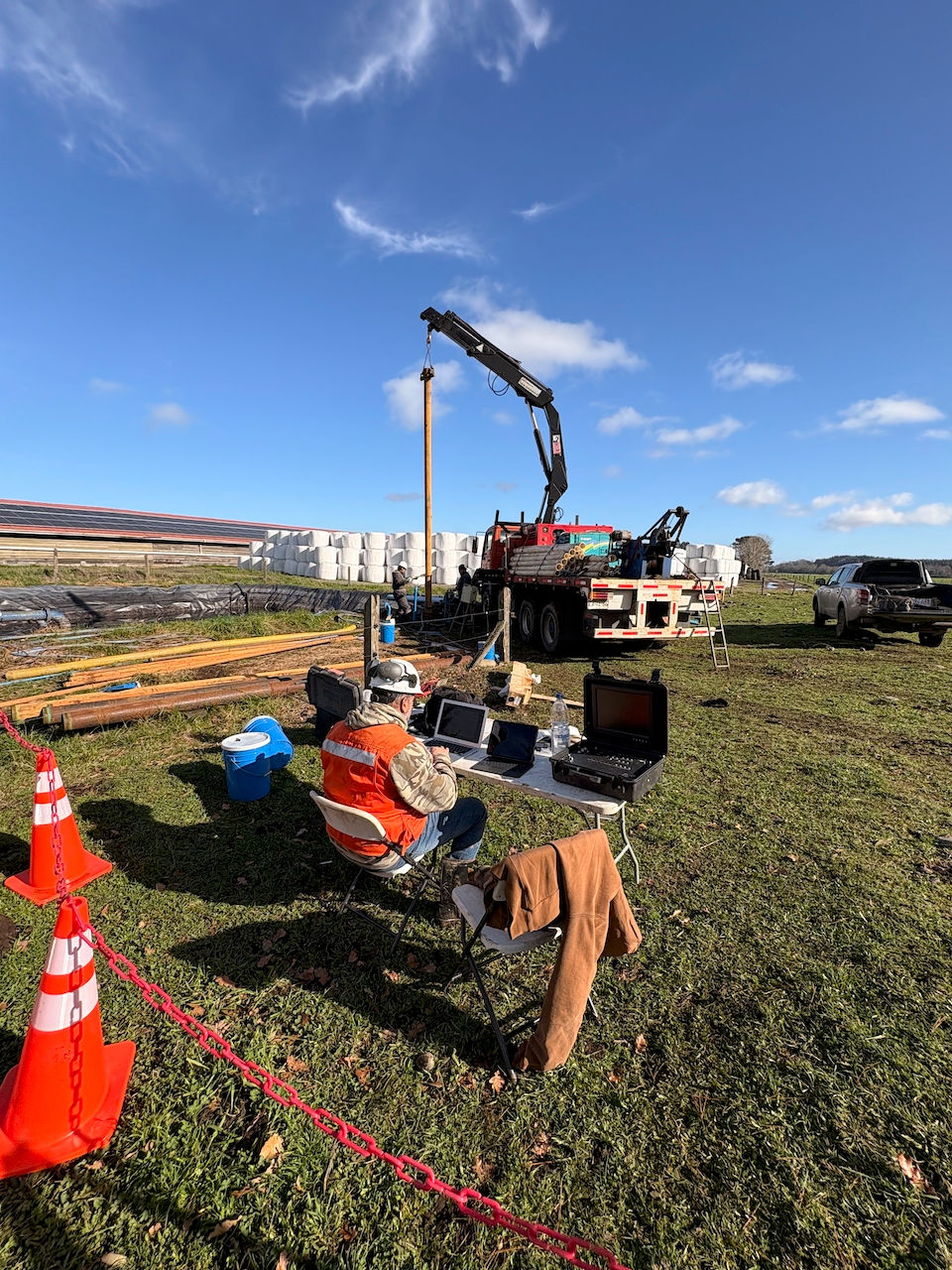
The televised inspection is particularly useful because it allows direct observation of the interior of a water intake and the detection of sediments, obstructions, deformations, damage or conditions of the filtering zones that cannot be determined from the surface.
3. Hydraulic evaluation
When it is necessary to know the actual capacity of a water intake, pumping tests can be carried out.
These tests allow the analysis of variables such as:
caudal;
static level;
dynamic level;
descent during pumping;
recovery;
hydraulic behavior of the well.
The goal is not only to determine how much water can be extracted at a given time, but also to have background information that allows for the correct sizing of the operation and the pumping system .
4. Classification and intervention plan
Based on the background information obtained, the wells can be classified according to their condition and priority.
For example:
Operational: can continue to function with normal maintenance.
Operational with observations: requires corrections or follow-up.
Requires intervention: presents conditions that justify cleaning, rehabilitation or modification of the system.
Critical: requires further evaluation before continuing to operate.
Insufficient information: further studies or tests are needed.
This allows for the organization of investments and the concentration of resources in the areas where they truly generate value.
Well audit before buying a field
One of the most interesting applications of this service is the technical evaluation during the purchase of agricultural properties or productive assets that have deep wells .
The existence of a well does not necessarily guarantee that it is in suitable condition for the future operation of the project.
A property may have several wells and, at the same time, require significant investments in:
rehabilitation;
new pumps;
electrical panels;
frequency converters;
pipes;
pumping tests;
telemetry;
structural recovery;
or even new acquisitions.
Knowing this background before an acquisition allows for a better estimation of the water CAPEX associated with the asset .
For a buyer, investment fund, or agricultural company, this information can become a relevant tool both for evaluating the investment and for negotiating the purchase conditions.
We can also support the design of new wells
Well Engineering and Auditing is not limited to existing wells.
Río Blanco can also provide technical support for new well projects by defining or reviewing design criteria such as:
drilling diameter;
enabling diameter;
target depth;
selection of materials;
location and type of screens;
capturing surface;
granular filter;
sanitary seal;
constructive methodology;
well development;
pumping test;
sizing of the pumping system.
A well should be considered as a complete system.
Drilling, casing, screening, development, pumping, piping, and control systems are all interrelated and must respond to the operational objective of the project.
A good well starts before drilling.
When do we recommend an audit?
A technical assessment can be especially useful when:
A company is considering buying a field;
There are several wells but there is no consolidated information;
The condition of old water intakes is unknown;
There is a decrease in flow;
A significant investment in pumping systems is planned;
A decision needs to be made between rehabilitating or drilling again;
It is necessary to prioritize investments among several wells;
a second opinion is needed on the design of a project;
The aim is to know the general condition of the water infrastructure of a property.
From inspection to an investment strategy
The objective of an audit should not be merely to generate a technical description of each well.
The information should allow us to answer a more important question:
What should be done with each acquisition?
Keep.
Rehabilitate.
Further your assessment.
Change the pumping system.
Modernize the control system.
Monitor.
Or, when technically appropriate, evaluate the construction of a new well.
The project developed in Tilama is a good example of this approach: identifying and evaluating the existing infrastructure subsequently allowed progress towards specific interventions, enabling and monitoring of the wells as part of a comprehensive solution.
Well Engineering and Auditing | Río Blanco Drilling
At Río Blanco Perforaciones, we combine experience in well construction, telematic inspection, rehabilitation, pumping tests, pumping systems, control panels, and telemetry to develop decision-oriented assessments.
Our Well Engineering and Auditing service is aimed at agricultural companies, industries, field owners, investors and organizations that need to know the condition of their water sources before making new investments.
Are you evaluating a field, a set of wells, or a new project?
We can review the available background information, define the scope of the evaluation, and develop a technical diagnosis tailored to the needs of your project.
Comments